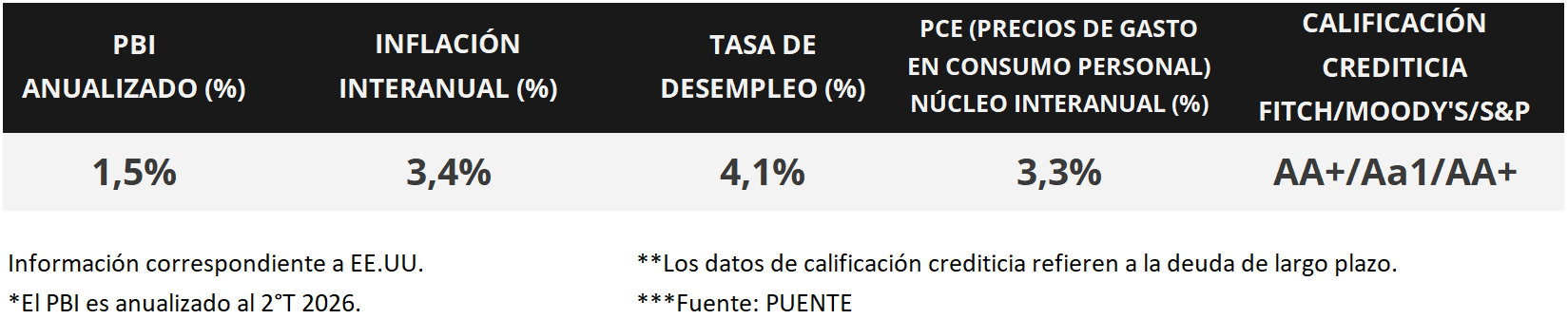
In the United States, 162,000 jobs were created in August, nearly triple the consensus estimate of 55,000 new jobs and the revised figure for July (21,000 jobs). The unemployment rate remained at 4.1%, in line with expectations, with a slight increase in labor force participation. Against this backdrop, the US Treasury yield curve showed mixed results this week, with the 1-year Treasury yield narrowing to 4.11% and the 10-year yield widening to 4.78%. This week, attention will be focused on the release of August inflation figures, which are projected to show a year-on-year increase of 3.4% and a 2.5% increase for the core inflation rate (excluding food and energy). Additionally, wholesale inflation for the period will be released, while there is anticipation regarding the course of the ongoing conflict in the Middle East, which remains unresolved. Looking ahead to the coming months, the outlook is for inflation to remain above the central bank's target (2.0%) and a resilient labor market, which would lead to the benchmark interest rate (currently in the 3.5%-3.75% range) remaining at historically high levels. This allows for higher nominal returns for longer periods on investment-grade bonds, with maturities up to five years being particularly attractive.
Weekly Monitor
International
This week's focus in the United States will be on the release of the August Consumer Price Index (CPI), with expectations of a 3.4% annual increase and a 2.4% increase in core inflation. Wholesale inflation for the same period will also be released, with estimates of a 5.2% increase and a 4.6% increase in core inflation. Meanwhile, the European Central Bank (ECB) will hold its monetary policy meeting, with a quarter-point increase in the benchmark interest rate to 2.65% projected. Finally, the final GDP figure for the second quarter will be released, with a projected 1.0% annual growth rate. Finally, in Latin America, August inflation figures will also be released for Brazil, Mexico, and Chile, with year-on-year increases expected at +4.3%, +3.3%, and +3.8%, respectively. The Bank of Chile will also decide on its interest rate path, which is expected to remain unchanged at the current 4.5%.
In the United States, 162,000 jobs were created in August, the highest performance in the last four months. This result exceeded the consensus estimate of 55,000 new jobs and the revised July figure of 21,000 jobs created (from a loss of 23,000). Meanwhile, the unemployment rate remained at 4.1% for the second consecutive month, in line with expectations, reflecting higher labor force participation (61.6%).
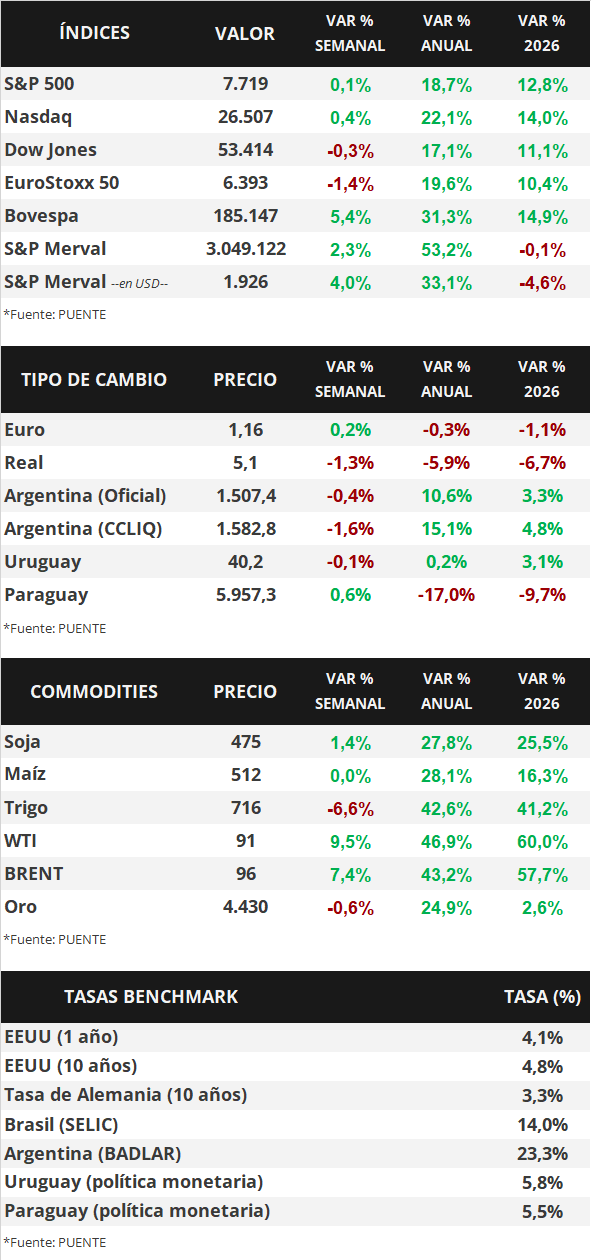
Against this backdrop, the US Treasury yield curve showed mixed results during the week. Thus, the 1-year bond yield contracted from 4.13% to 4.11%, while the 3-year yield increased from 4.40% to 4.45%, and the 10-year yield rose from 4.72% to 4.78%. Meanwhile, investment-grade corporate bonds (LQD ETFs) achieved an average return of 5.9%. Elsewhere, the main US stock indices traded mixed, with the Nasdaq standing out with a weekly gain of 0.4%.
In the Eurozone, preliminary inflation for August showed a monthly increase of 0.4% and a year-on-year increase of 3.3%, in line with expectations, and demonstrating an acceleration compared to July. Core inflation, meanwhile, reached 0.2% monthly and 2.4% year-on-year, slightly below the projected 2.5%. Regarding economic activity, July retail sales fell short of projections, declining 0.6% month-on-month but rising 0.6% year-on-year. Against this backdrop, the euro gained 0.2% for the week, reaching 1.16 euros per dollar, while the EuroStoxx 50 index fell 1.4%.
In Latin America, Brazil's Q2 GDP figures were released, exceeding analysts' consensus projections. Specifically, it grew 0.5% quarter-on-quarter and 2.0% annually, the latter being the best performance in a year. In this context, the Bovespa stock index closed with a 5.4% weekly gain.